
Government schemes such as the PM E-Drive initiative, with allocations of around Rs 2,000 crore for charging points deployment, are helping accelerate rollout
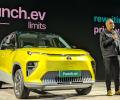
With its Battery-as-a-Service (BaaS) model Tata Motors just redrew the EV battle lines, says Rajesh Karkera/Rediff.com

With the 40kWh battery and 65kW faster charging, it is now a legitimate primary car for a small family that can handle weekend trips easily, says Rajesh Karkera.
Kerala has overtaken more industrialised states in personal electric vehicle adoption, driven by strong middle-class uptake, policy support, and charging infrastructure.

Indian car buyers care more about affordability than technology, keeping ICE vehicles dominant while hybrids emerge as the preferred transition option and EVs struggle in the mass market.
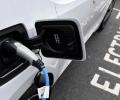
'The testing and certification have been completed, and implementation could occur within a year, depending on the number of vehicles.'

Tata Power has partnered with Salesforce to digitally transform its rooftop solar, EV charging, and smart home solutions businesses, aiming to enhance customer engagement and operational efficiency.
Tata Power collaborates with Salesforce to digitally transform its rooftop solar, EV charging, and smart home solutions businesses, aiming to enhance customer engagement and operational efficiency.
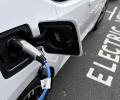
Mahindra & Mahindra on Thursday said it has tied up with a unit of Adani Total Gas to establish electric vehicle charging infrastructure across the country. The auto major and Adani Total Energies E-Mobility Ltd (ATEL) have inked a memorandum of understanding (MoU) in this regard. The MoU sets a roadmap for the creation of an expansive EV charging infrastructure across the country, it added.

Automaker MG Motor India on Monday said it has partnered with Bharat Petroleum Corporation Ltd (BPCL) to bolster EV charging infrastructure across the country. The partnership with BPCL will add momentum to EV adoption by expanding opportunities for intercity travel as the two entities will install EV chargers across highways and within cities, the automaker said in a statement. With BPCL's vast customer reach and operations and MG's strides in the EV space, the two entities can combine expertise to strategically identify charging sites, garner consumer insights, devise loyalty programs, and create technology to manage charging systems, it added.

Indian Oil Corporation (IOC) and two other public sector oil firms will install 22,000 electric vehicle (EV) charging stations over the next 3-5 years to support the nation's target to reduce its carbon intensity and reach net zero emissions by 2070. IOC, the country's largest state-controlled refiner by capacity, will set up EV charging facilities at 10,000 fuel outlets over the next three years, chairman Shrikant Madhav Vaidya said. Bharat Petroleum Corporation Ltd (BPCL) said it will set up 7,000 stations over the next five years while Hindustan Petroleum Corporation Ltd (HPCL) has plans for 5,000 stations.
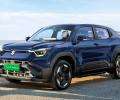
Maruti Suzuki India plans to localise battery production and other critical components over the next few years as part of strengthening the overall EV ecosystem in the country. The company, which plans to launch its first electric vehicle - e VITARA in the domestic market next year, is looking to instill confidence in the buyers as it looks to strengthen the overall EV ecosystem.

Electric vehicle (EV) retail sales surged 16.37 per cent year-on-year to 22,70,107 units in 2025, driven by a 77 per cent jump in electric passenger car sales, according to data released by dealers' body FADA on Wednesday. The EV makers had recorded a total sales of 19,50,727 units in 2024, the Federation of Automobile Dealers' Association (FADA) said.

Mahindra and Mahindra (M&M) recorded the sharpest acceleration among large players, with EV retail jumping to 33,513 units from 7,139 units, an almost 5-fold jump, aided by strong demand for new launches.

Toyota on January 20, 2026, officially entered India's mass electric vehicle segment with the maiden launch of the Toyota Urban Cruiser Ebella in Mumbai.

BYD's new charging system is capable of up to 1000kW charging speeds which may be achievable in China, the carmaker's home market, but such high charging speed is not available in India.

Jio-BP, the fuels and mobility joint venture between Reliance Industries and UK's BP, on Thursday announced a partnership with BluSmart - India's first and largest all-electric ride-hailing platform - to set up a network of commercial large-scale EV charging stations. As part of the partnership, Jio-BP will set up these stations for passenger electric vehicles and fleets across the country, the company said in a statement. "Through this partnership, both companies will collaborate in planning, development and operation of EV charging infrastructure, at suitable locations across cities where BluSmart operates," it said.
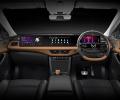
Mahindra pushes premium EV strategy with XEV 9e Cineluxe, blending luxury design, immersive technology and over 500 km range capability.

Mahindra & Mahindra (M&M) is stepping beyond vehicle manufacturing to build a national electric-mobility ecosystem.

French automotive component maker Valeo on Wednesday said it will invest over Rs 2,150 crore in India and treble its annual sales in the country to around Rs 7,510 crore by 2028.

EV manufacturers point out that converting a regular petrol car into a flex-fuel vehicle requires only about Rs 17,000-25,000 per unit, whereas developing an EV demands vastly greater investments in research, battery development, and localisation.

'Within six months I expect petrol, diesel, and electric vehicles (EVs) to reach cost parity,' says Union Minister for Road Transport and Highways Nitin Gadkari.

India's electric passenger vehicle (ePV) market has expanded sharply over the past five years, with registrations rising from just 3,252 units in 2020 to about 170,000 in 2025. Throughout this scale-up, southern states have remained the bedrock of adoption, consistently contributing around one-third of national electric vehicle (EV) registrations - emphasising the region's role as the structural backbone of India's EV transition.

India's electric vehicle (EV) markets expanded gains in January compared to the year-ago period, as two-wheeler and passenger vehicle sales triggered a shuffle in the competitive landscape, data from an automobile dealers' association showed.

On the back of an aggressive asset monetisation push, the government will press the throttle on the build-operate-transfer (BOT) model - under which private developers fund highway construction - for future highway development, Union Minister for Road Transport and Highways Nitin Gadkari said.
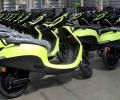
India's electric two-wheeler (e2W) manufacturers have urged the government to extend subsidies under the PM E-Drive (Electric Drive Revolution in Innovative Vehicle Enhancement) scheme beyond March 2026, cautioning that a withdrawal could slow near-term demand even as confidence in long-term electric mobility adoption remains intact.
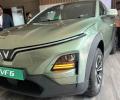
VinFast's VF6 storms into India as the most affordable electric SUV above 4 metres, packing premium features, 468km range, and free charging till 2028 to disrupt the EV market, observes Somnath Chatterjee.

The charging infrastructure expansion includes the setup of over 600 DC charging stations by 2030 (including company-owned and company-operated ones) in addition to partnerships with over 10,200 charging points, collaborating with operators like Shell, Charge Zone, and Statiq.
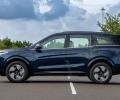
The XEV 9S is poised to disrupt the market, specifically with its entry-level variant called the 'Pack One Above', which offers a level of equipment rarely seen in base models, writes Rajesh Karkera/Rediff.com.
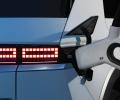
India may see its busiest EV festive season in 2025 with SUVs, luxury cars and scooters set to launch, but rare-earth supply bottlenecks risk delaying rollouts.

Bajaj Auto is planning a slow, calibrated push to take the Chetak, its electric scooter, to more than 100 countries on the strength of its distributor network and market-specific localisation rather than an aggressive global rollout, reports Sohini Das.

Starting January, the market is expected to welcome models like the Tata Punch 2025 which is expected to be around 6 lakh, Mahindra BE 07 EV around 29 lakh, Maruti WagonR Electric around 8.5 lakh, Toyota 3-Row SUV around 14 lakh, and Volkswagen Tera to be around 8 lakh.
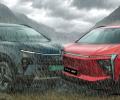
Tata Harrier.ev versus Mahindra BE.06 versus Mahindra XEV.9E -- which one should you buy? Rajesh Karkera offers a checklist of features to influence your decision.
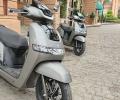
Hero MotoCorp and TVS Motor crossed Rs 1,000 crore in R&D spend for the first time, as legacy OEMs accelerate innovation to compete with new-age EV players.

Yamaha expects its first EVs to hit showrooms by the last quarter of FY26 (January - March), once network readiness is complete.

About 99,165 electric cars were sold in India in 2024, but electric car penetration -- share of electric car sales in total sales -- was just about 2.5 per cent.
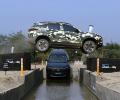
Frankly, I never expected to be offroading in an electric vehicle, let alone an SUV of this calibre, raves Rajesh Karkera/Rediff after a test drive.
Proliferation of home chargers of around 7 KWh and above, which take six to seven hours to fully charge a car depending on the model, bring running costs down by a third or so. That, coupled with the increasing range of modern electric cars, can lead to a massive increase in sales.
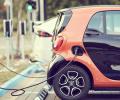
Despite the benefits of hybrid technology, a lack of government backing and few launches have kept the segment from gaining ground.
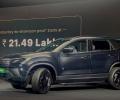
The Harrier EV is the first mainstream EV in India to offer a dual-motor, all-wheel-drive (AWD) which the company has termed as QWD, The Quad Wheel Drive, reports Rajesh Karkera.
 © 2026 Rediff.com - Investor Information - Advertise with us - Disclaimer - Privacy Policy - Sitemap - Feedback - About us - Terms of use - Grievances